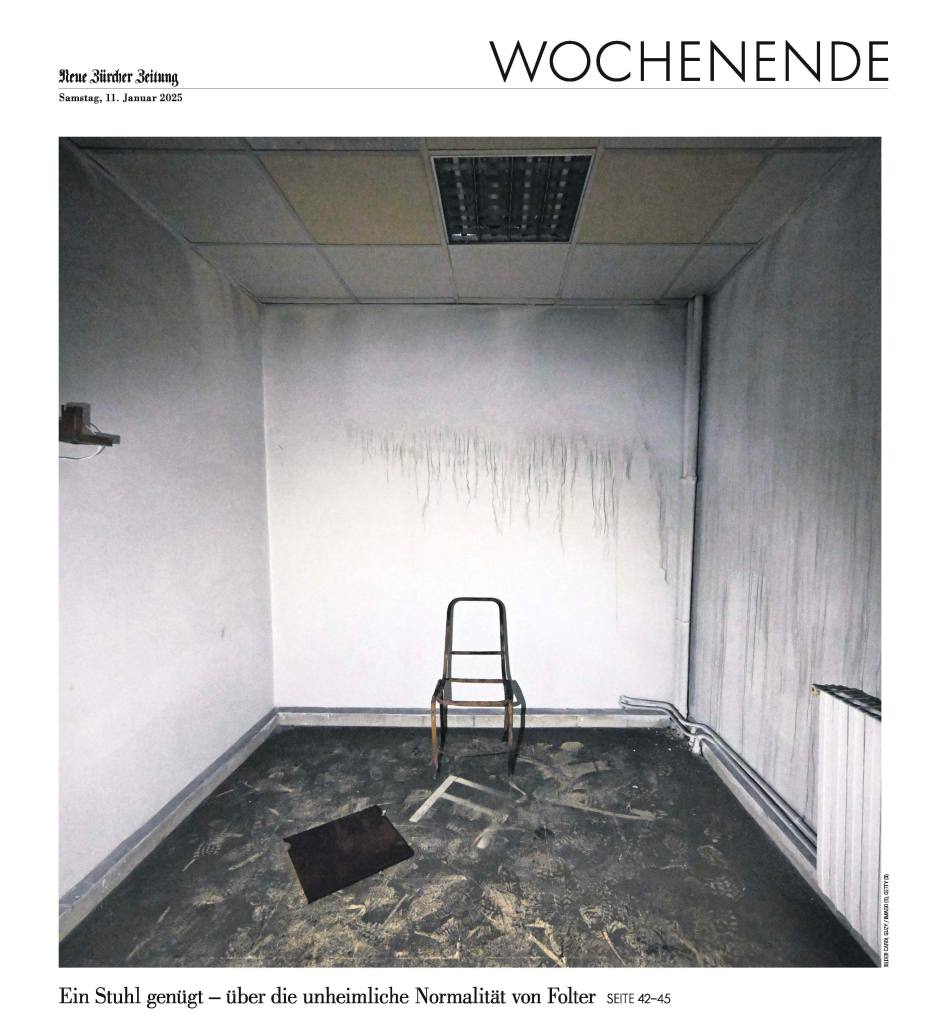
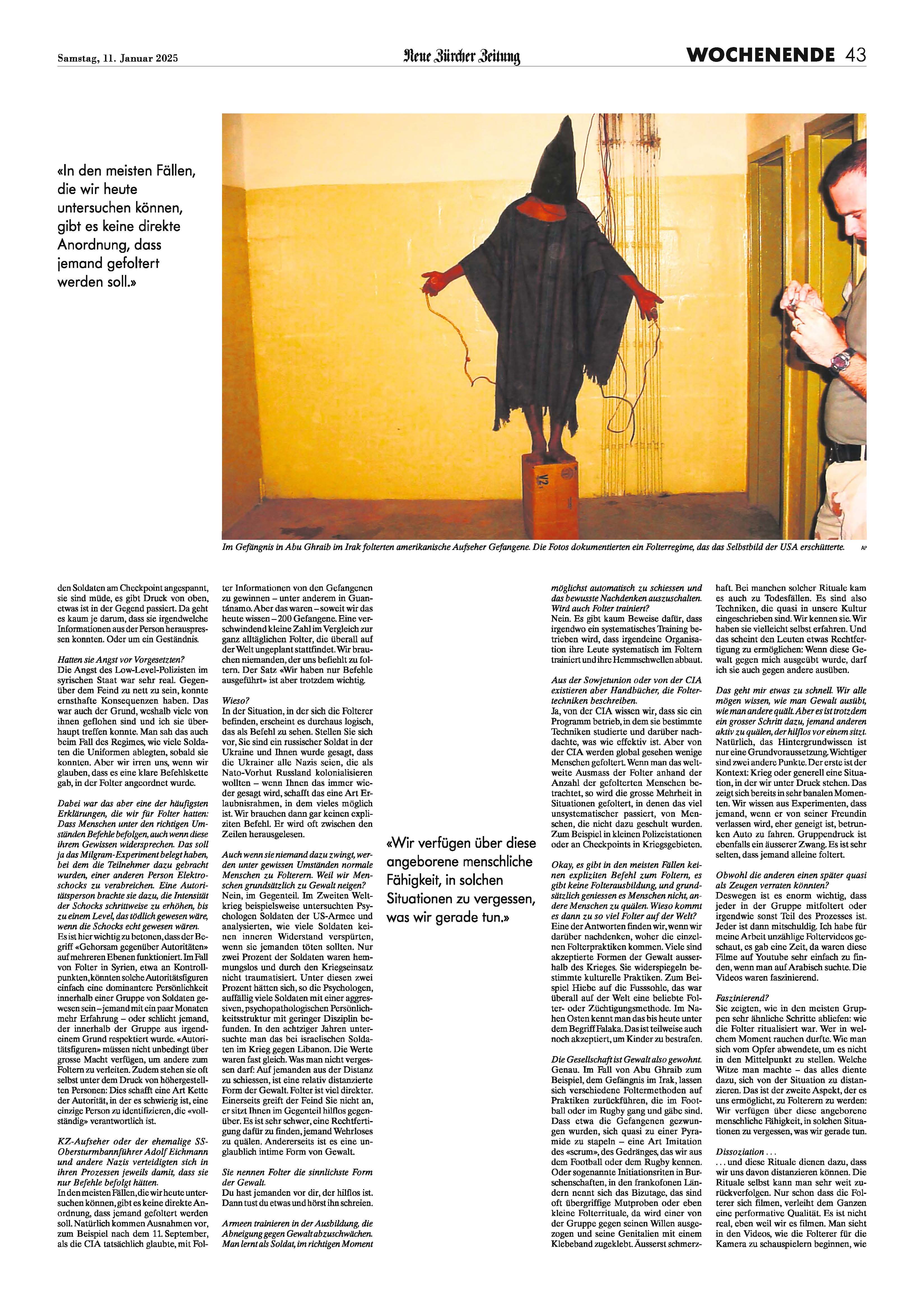
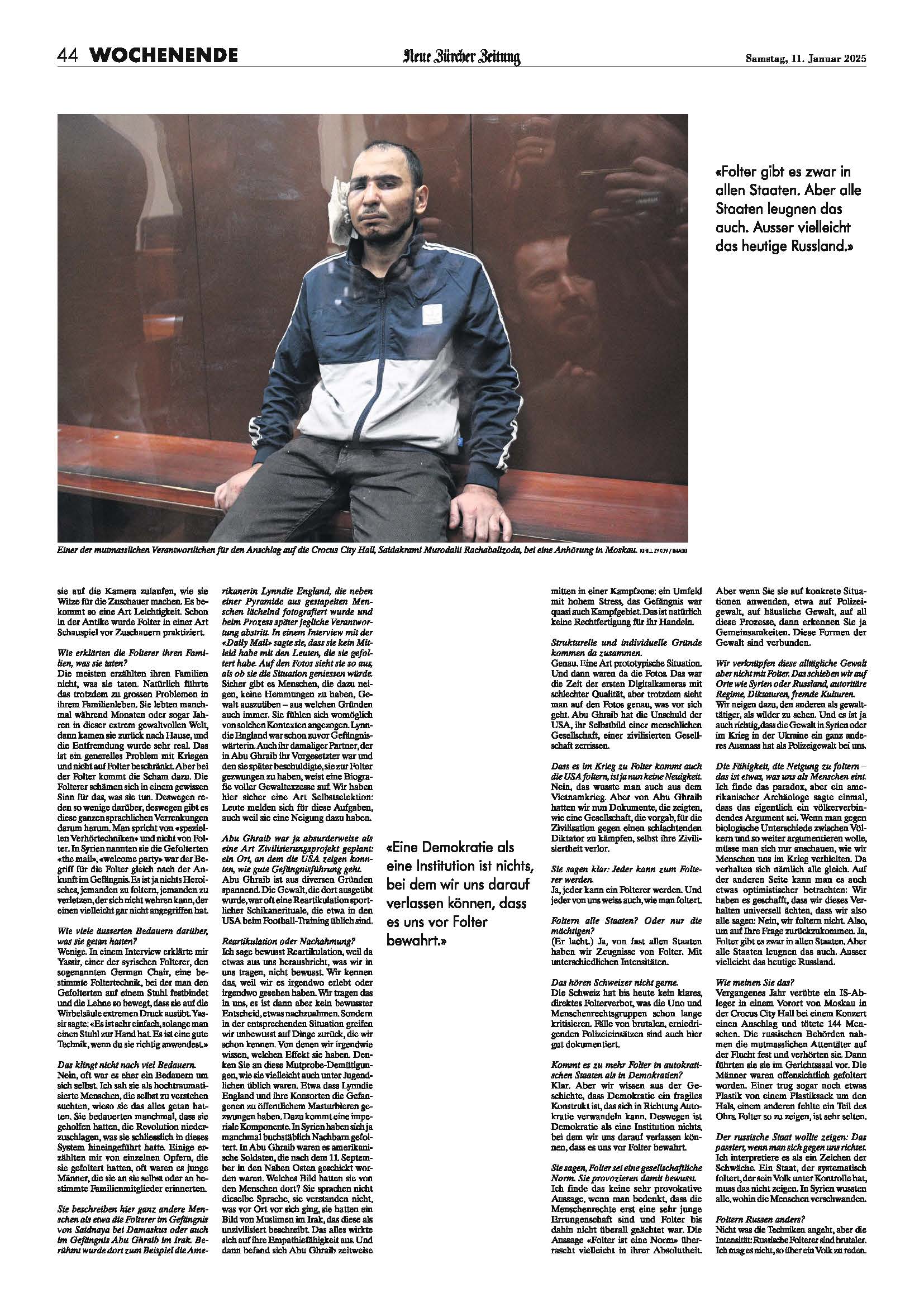
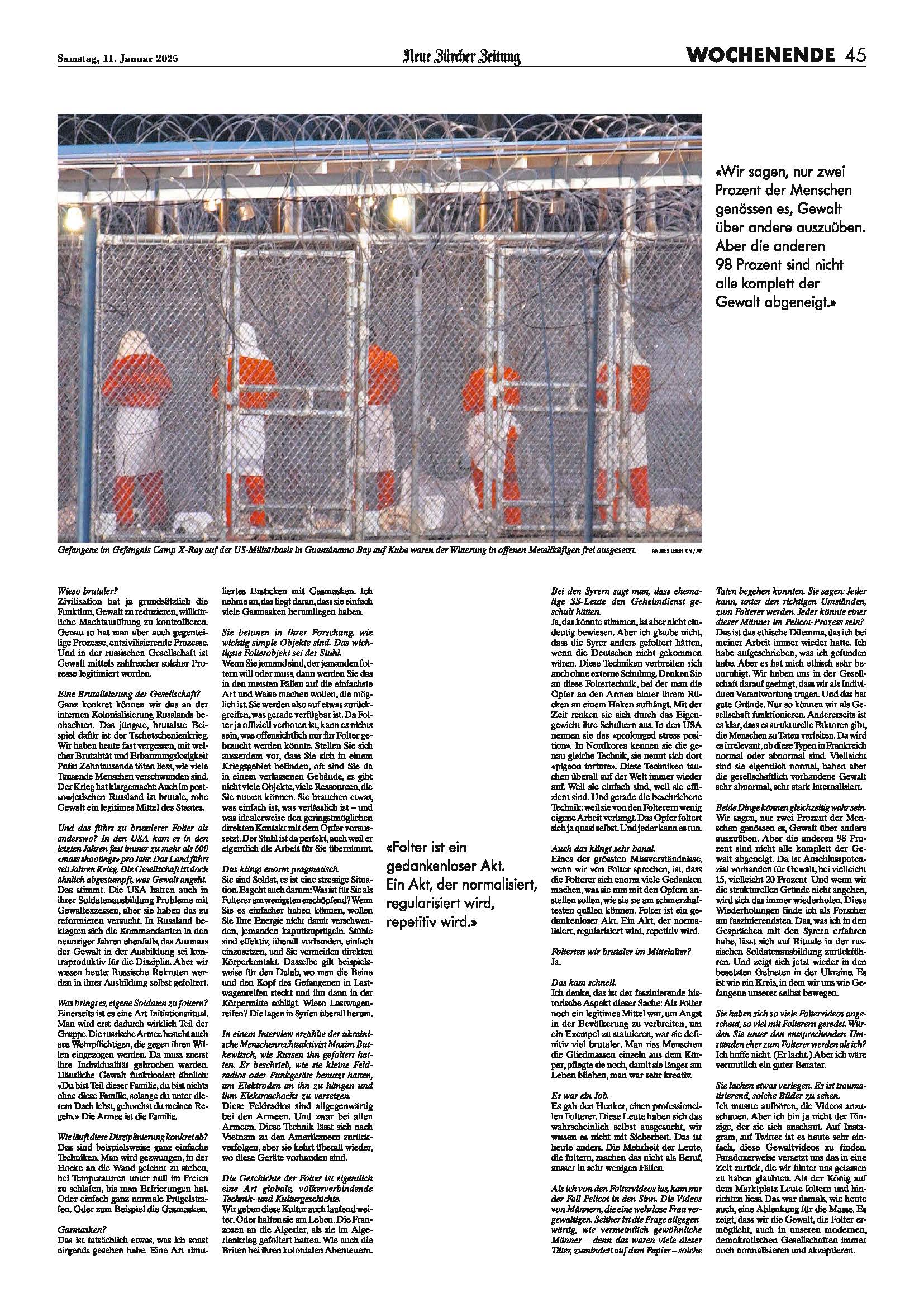
full media profile at nzz (Neue Zürcher Zeitung):
«Anyone can become a torturer. And all of us, in some way, already know how to torture»
Why does one person torture another? Only rarely is it to gain information or in response to explicit orders, and almost never because the torturer enjoys violence. Political Scientist Jonathan Austin has spoken to dozens of people who tortured others. He says torture is a cultural practice.
In this full-length feature of my research on political violence and torture, the leading Swiss newspaper of record NZZ interviewed me following the fall of the Syrian regime in late 2024, and the further normalization of torture and other forms of violence globally due to geopolitical shifts.

Visualizing research:
grievable/ungrievable
How does someone embody political evil? Is it possible to grieve for their having fallen into that space? And how do we represent all this?
These questions are at the heart of the short dance-based film Grievable // Ungrievable. The film was produced as part of my work leading the Violence Prevention (VIPRE) Initiative. Based on a project conceptualized as part of VIPRE, a group of Interdisciplinary MA students (Aline Wani, Maevia Griffiths, Massimiliano Massini) collaborated with a dancer, and choreographer (Alexane Poggi), film-maker (Benoît Ecoiffier), and sound designer (Dorian Voos) to translate the conceptual and empirical core of my work on political violence into visual form. The film represents the process through which an individual ‘slips’ towards carrying out acts of torture, and the paradoxical psychological harm this imposes upon perpetrators. It does so through the practice of dance. This is especially pertinent given the longstanding historical linkages between dance and violence, as most prominently articulated in military cultures of drilling. While representing a deeply controversial topic – both socially and scientifically – the short film delicately questions whether or not we can ‘grieve’ for the ways in which violence emerges beyond a narrow understanding of its deliberate or purposeful enaction.
My collaboration on this project also reflects my wider attempts to support alternative multimodal forms of research dissemination wherever possible, in order to widen public impact.
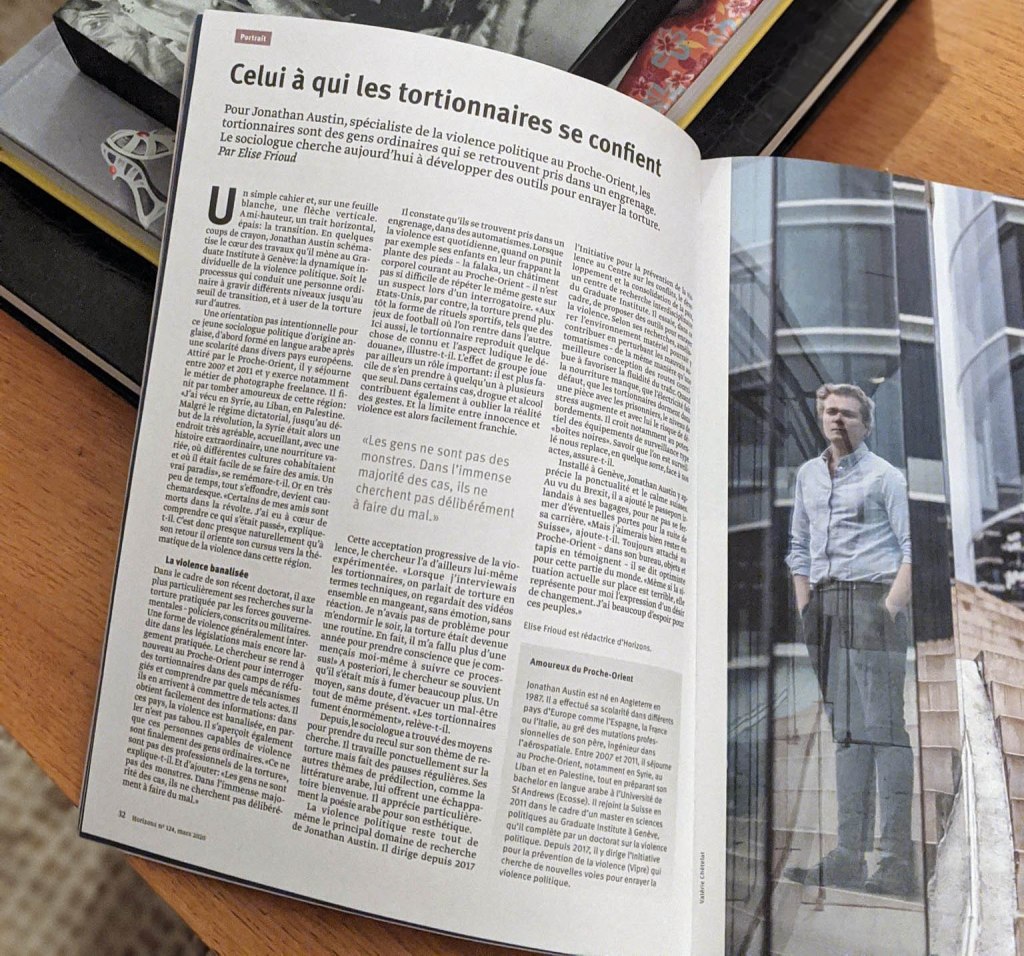
FULL MEDIA PROFILE AT SNSF Horizons:
Celui à qui les tortionnaires se confient
My work received a full-length profile in the Swiss research magazine Horizons, with particular focus on my work interviewing perpetrators of war crimes, as well as my applied work on violence prevention.
 Jonathan Luke Austin