Applied Research
Most of my career has been spent studying the social and political dynamics of phenomena that I would prefer did not exist; torture, war, conflict, humanitarian crisis. Because of this, my work has always had a second focus: applying research to practice. To achieve this, I engage collaborations far beyond my own discipline – with architects, development engineers, computer scientists, doctors, chemical engineers, and so on – as well as practitioners, in order to develop projects with applied impact. Below are a few examples of such projects, which I am currently developing.
1. ADAPT-MH (adaptive psychosocial triage technology)
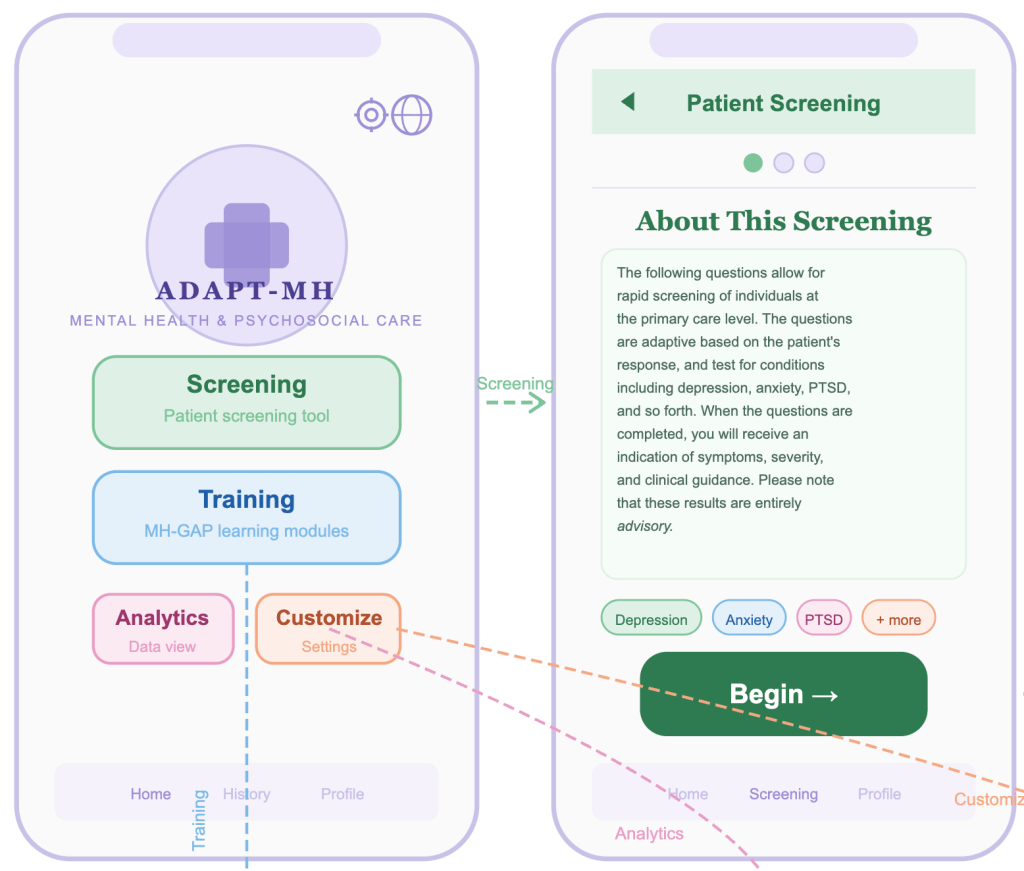
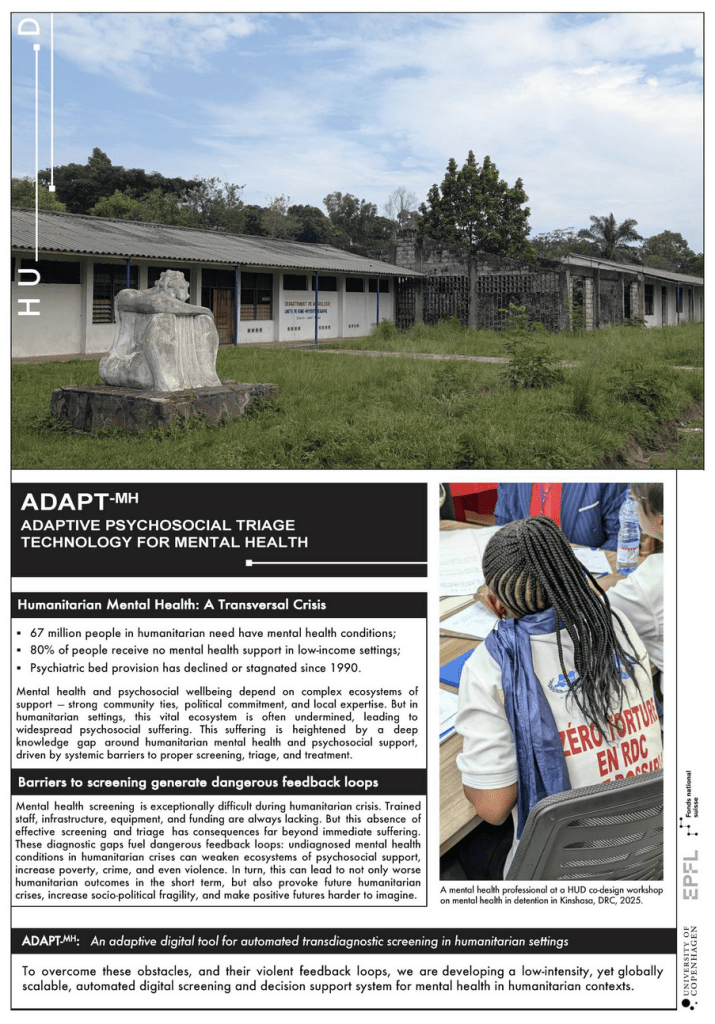
Over 65 million people in humanitarian need also suffer from a mental health condition, yet most are never diagnosed or treated due to extreme resource constraints. ADAPT-MH (Adaptive Psychosocial Triage Technology) addresses this gap. ADAPT-MH is a scalable digital system for automated psychosocial screening and triage in humanitarian contexts. It leverages machine learning to deliver clinical decision support, enabling task-sharing and stepped-care approaches to mental health services. Developed through key partnerships in the Democratic Republic of the Congo, Colombia, and South Africa, ADAPT-MH also draws on the expertise of humanitarian partners at the ICRC and Terre des hommes — all working toward one shared goal: reducing the global burden of mental health and psychosocial suffering. ADAPT-MH is a result of my work as Principal Investigator for the Future of Humanitarian Design (HUD) research project. As part of HUD, a bottom-up needs assessment was produced through a year-long ethnography of humanitarian settings, which resulted in a community-driven focus on mental health technology and its potential to improve primary care services.
2. VIOLENCE PREVENTION
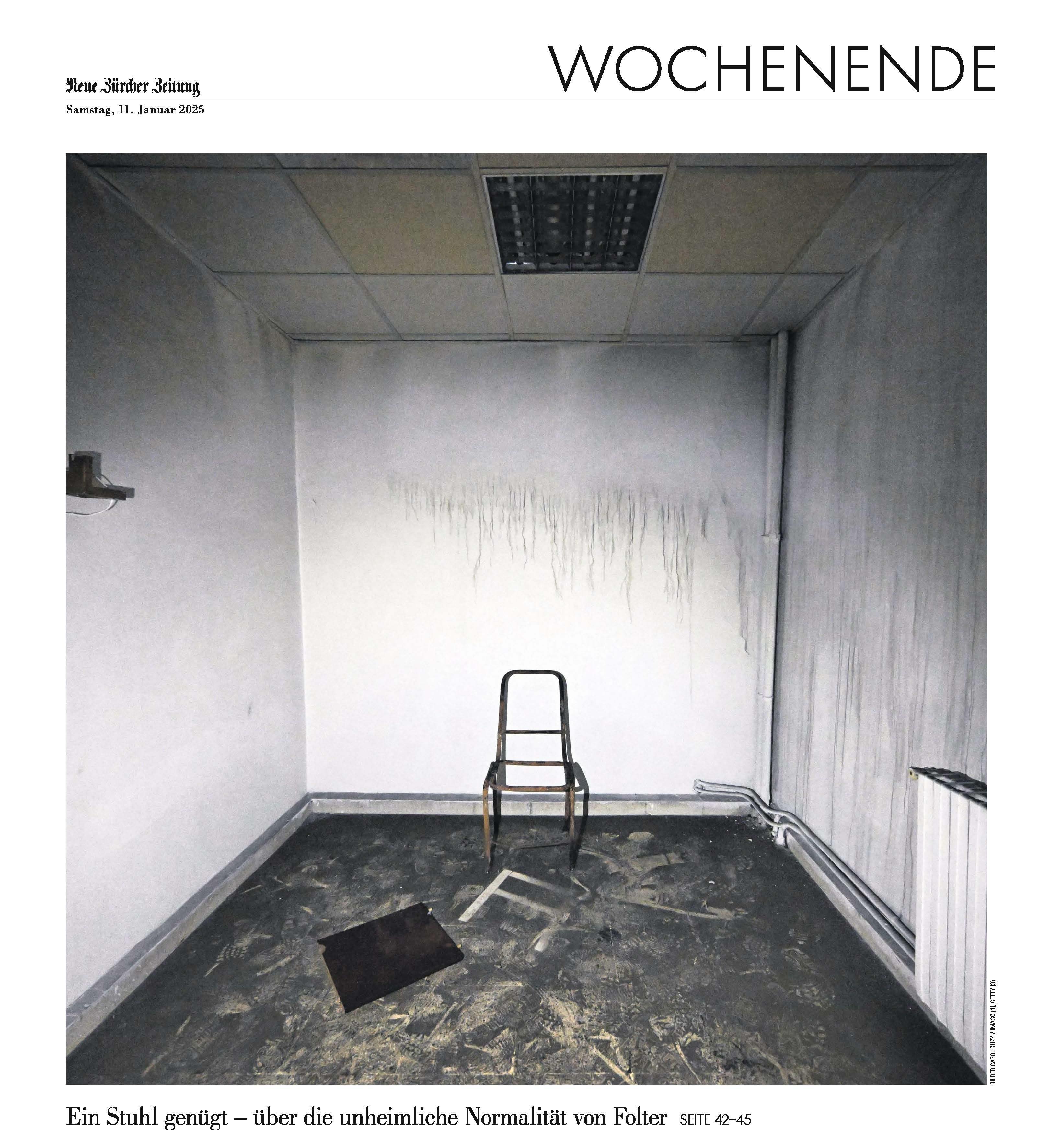
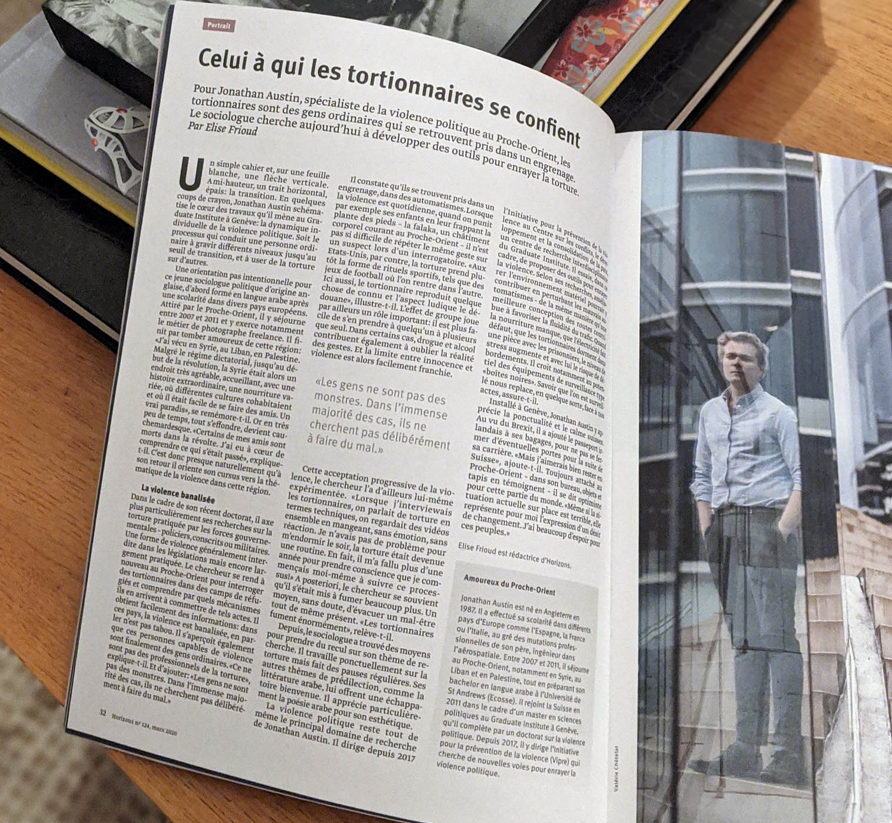
At the core of my applied research has been developing novel approaches to violence prevention. For example, I previously led the Violence Prevention Initiative, an international research and practice collaboration drawing on behavioral science and pragmatist sociology to develop novel interventions against violence by adapting the behaviour of potential perpetrators of war crimes and political violence. This work was carried out in collaboration with key international organizations such as the ICRC, the UN, and the World Bank. My agenda here has continued with my work leading the Future of Humanitarian Design research collective which brings together social science, engineering, architecture, and humanitarian practitioners to disrupt violence in detention, refugee camps, and elsewhere. As part of this work, I have also carried out substantial public outreach, through the media, and also collaborating with film-makers to produce artistic renditions on the importance of violence prevention.

3. co-design and transdisciplinarity
My applied research is always carried out in a collaborative, co-designed, and transdisciplinary manner. Across my career – for example – I have worked not only with other social scientists from across political science, sociology, anthropology, and economics, but also with medical doctors, psychosocial clinicians, material scientists, architects, development engineers, structural engineers, and others. I have also worked extensively outside Europe and North America, integrating the insights of scientists, experts, and practitioners in the Middle East, Latin America, and sub-Saharan Africa. While this ethos has been central to the major projects I have carried out, described above, I have also collaborated on a shorter-term basis on projects where I feel social science can have a real positive impact. Examples include:
- A project on ‘oxygen justice’ (currently in development) that combines social science with material science and engineering, specifically ‘sorbent’ technologies, in order to develop more effective and just medical oxygen concentrator technologies;
- A project on the potential role of the private sector in augmenting violence prevention, especially post-election violence, which was commissioned by the United Nations and World Bank;
- A project on the politics of urban safety and peacebuilding, linking debates in urban planning to those in development and peace literatures, carried out for the Geneva Peacebuilding Platform.

